Closer is always better.
Even beats close. A flat light pressed near your nose leaves your cheeks and jawline farther away and dimmer. A curved dome keeps every part of your face at a similar distance.
Inverse-square lawQuieter than a plain on Mars. Let’s add some light.
Continue shoppingHave an account?
Log in to check out faster.

Published trials of red and near-infrared light, with the journal and the year.
adults, 4 weeks of red and near-infrared light
The real-light groups showed less wrinkling and better elasticity than the group under a sham light.
Lee et al. · Journal of Photochemistry and Photobiology B · 2007

people in a red light skin trial
Skin roughness and complexion improved compared with the control group over 30 sessions.
Wunsch & Matuschka · Photomedicine and Laser Surgery · 2014

of skin collagen lost each year of adult life
Measured in adults of different ages. It’s the slow leak the skin trials measure against.
Shuster, Black & McVitie · British Journal of Dermatology · 1975

Light obeys the inverse-square law: move twice as far from a source and only a quarter of the light reaches you. That’s why a flat lamp aimed at your nose leaves your cheeks and jawline in the dim.
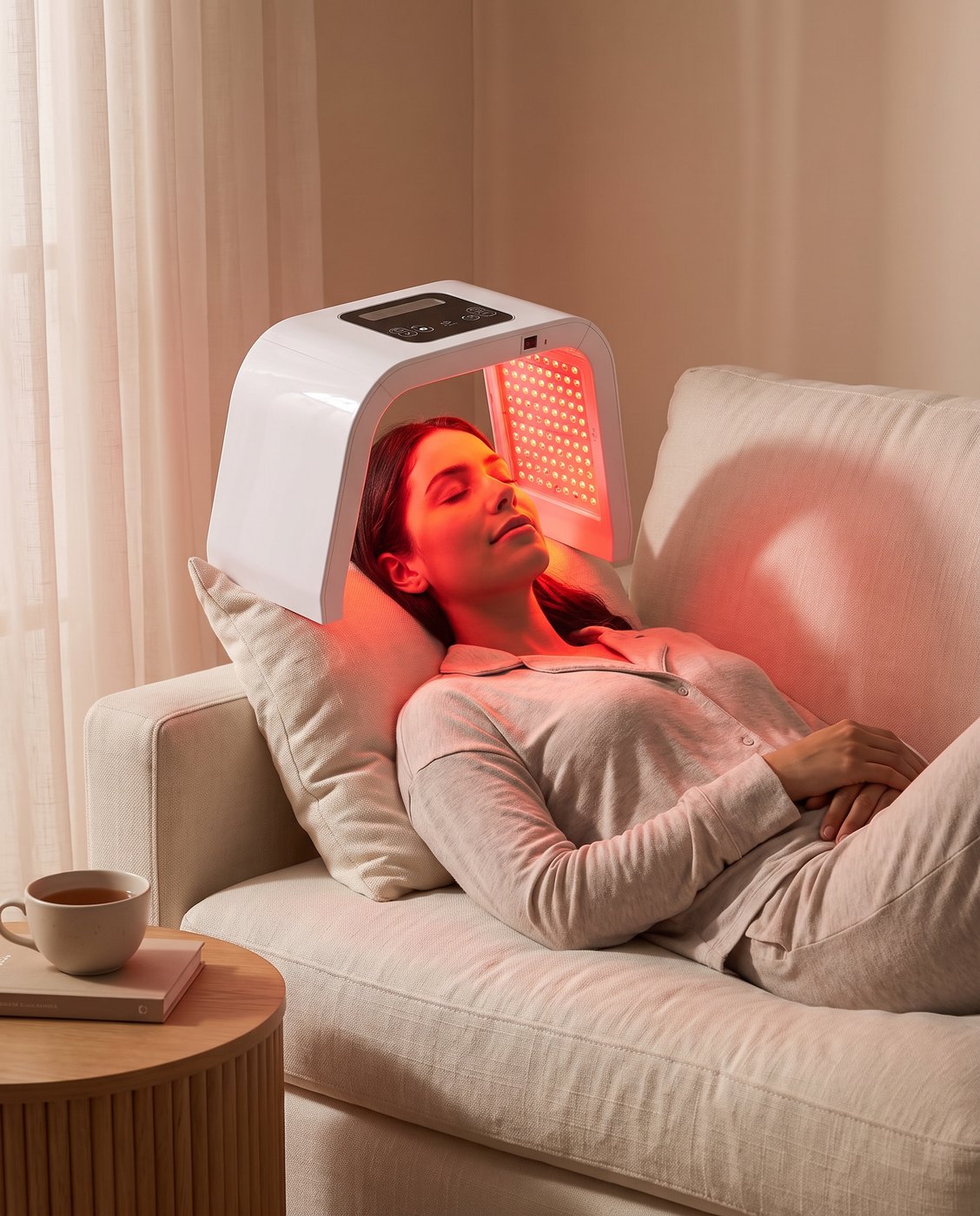
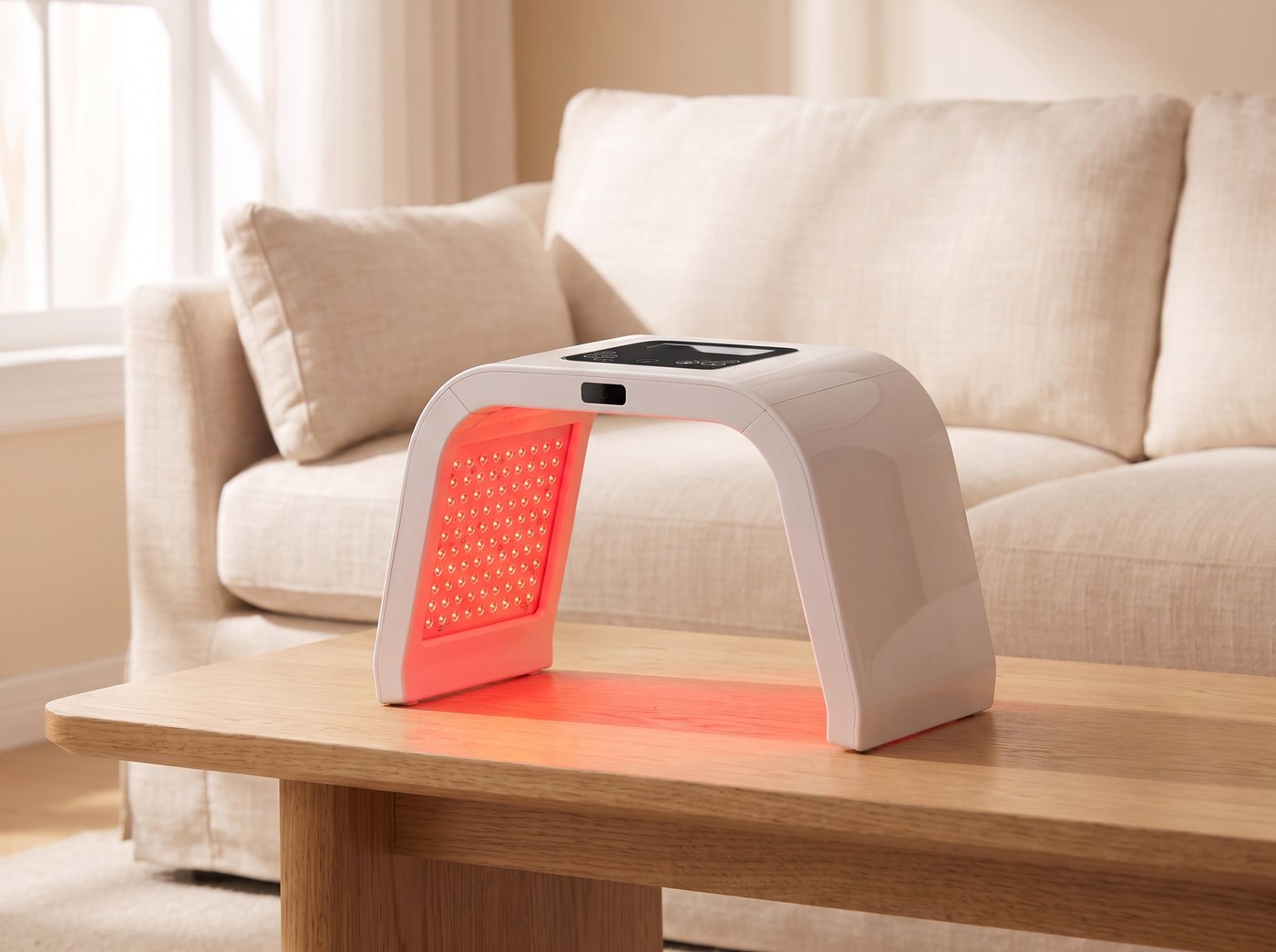
Gale’s three panels arch around you, so your forehead, cheeks and jaw each get their share.
Standing near a campfire versus sitting in a circle around it. Same fire. Very different warmth on the sides of your face.
Inverse-square law
What the light does
In a 76-person trial, red and near-infrared light twice a week reduced wrinkling compared with a sham light.
Lee et al. · 2007Red light sessions improved skin roughness and complexion in a 136-person trial.
Wunsch & Matuschka · 2014Twice the distance means a quarter of the light. The arch keeps your whole face at about the same distance.
Inverse-square lawLight has a dose curve: the right dose helps and too much can cancel the benefit.
Huang et al. · 2009Set it over you, sit back, and it curves around your face and neck. Done? It goes back on the shelf.

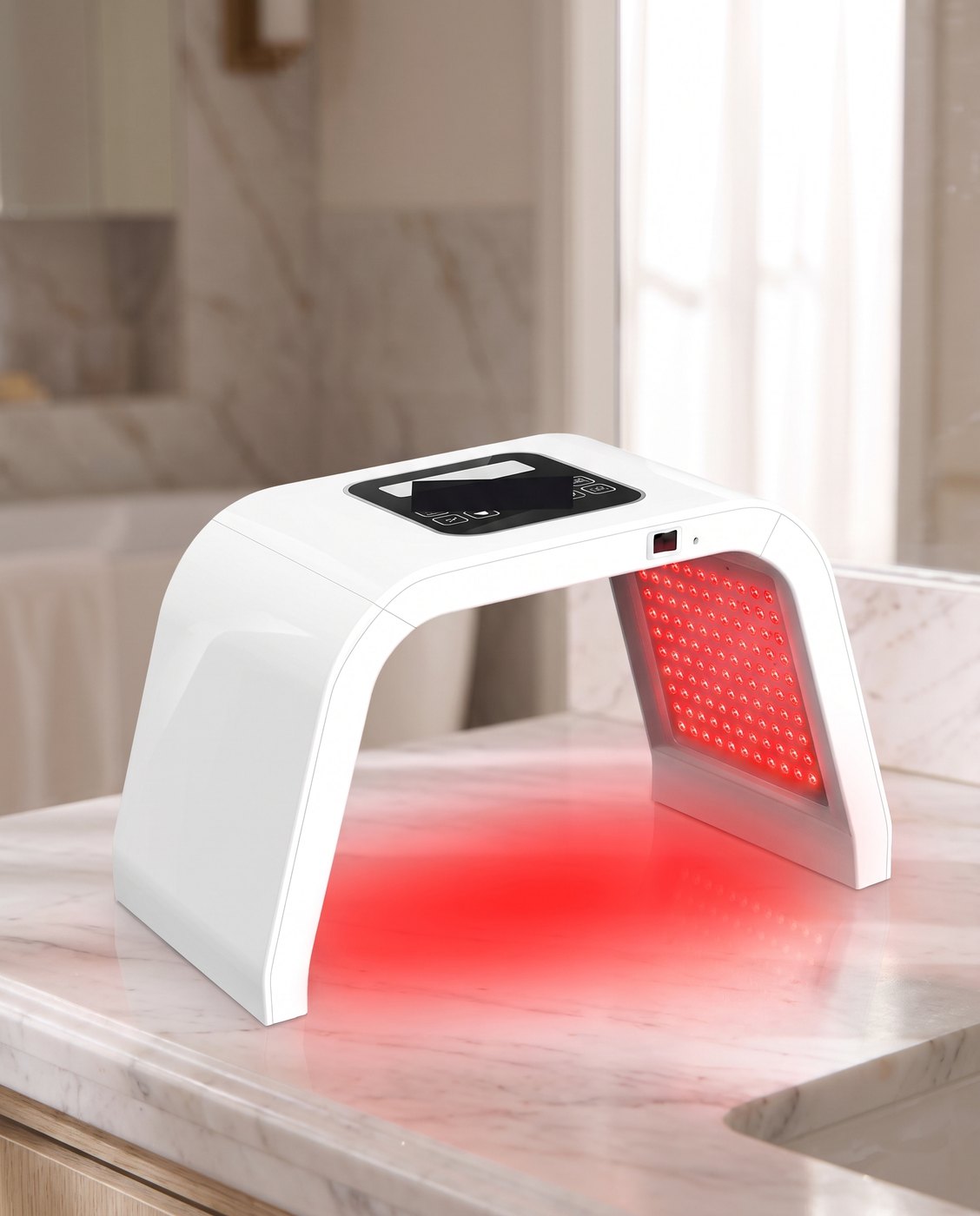
A flat panel is close to your nose and far from your jaw. An arch keeps your forehead, cheeks and jaw at about the same distance, so each gets its share.

Salon-level red light at home. No appointment, no commute.
Three ways to put red light on your face.
| Feature | Gale
|
Clinic LED facial | Handheld wand |
|---|---|---|---|
| Contact | None | None | Pressed to your skin |
| Coverage | Face and neck at once | Face | One spot at a time |
| Hands-free | Yes | Yes | No, you hold it |
| Where | At home | At the clinic | At home |
| Cost over time | One purchase | Per session | One purchase |
Myth vs truth
Closer is always better.
Even beats close. A flat light pressed near your nose leaves your cheeks and jawline farther away and dimmer. A curved dome keeps every part of your face at a similar distance.
Inverse-square lawTen minutes is too short to matter.
A light dose is energy per area: power multiplied by time. Up close, ten minutes delivers what a lamp across the room needs far longer to reach. Short is the design, not a shortcut.
Inverse-square law · Huang et al. · Dose-Response · 2009You need hours of light every day.
The 76-person wrinkle trial used two sessions a week. Light works on a dose curve, so short, regular sessions beat long, rare ones.
Lee et al. 2007 · Huang et al. 2009The whole lineup, the way you’ll use it.
The research
Every claim on this page points to a published paper. Here they are.
Full-body red light units, twice a week for 30 sessions. Skin complexion and roughness improved, and ultrasound measured higher collagen density than in the control group.
Wunsch & Matuschka · Photomedicine and Laser Surgery · 2014A review of red and near-infrared light in skin care: wrinkles, collagen, wound healing and acne, and how the light reaches the cells that make collagen.
Avci et al. · Seminars in Cutaneous Medicine and Surgery · 2013Reviewed the dose response of low-level light: too little does nothing, the right dose helps, and too much can cancel the benefit.
Huang et al. · Dose-Response · 2009A 2021 review of how red and near-infrared light act inside cells, from the mitochondrial enzyme to the signals linked to repair.
Glass · J Plastic, Reconstructive & Aesthetic Surgery · 2021FAQ

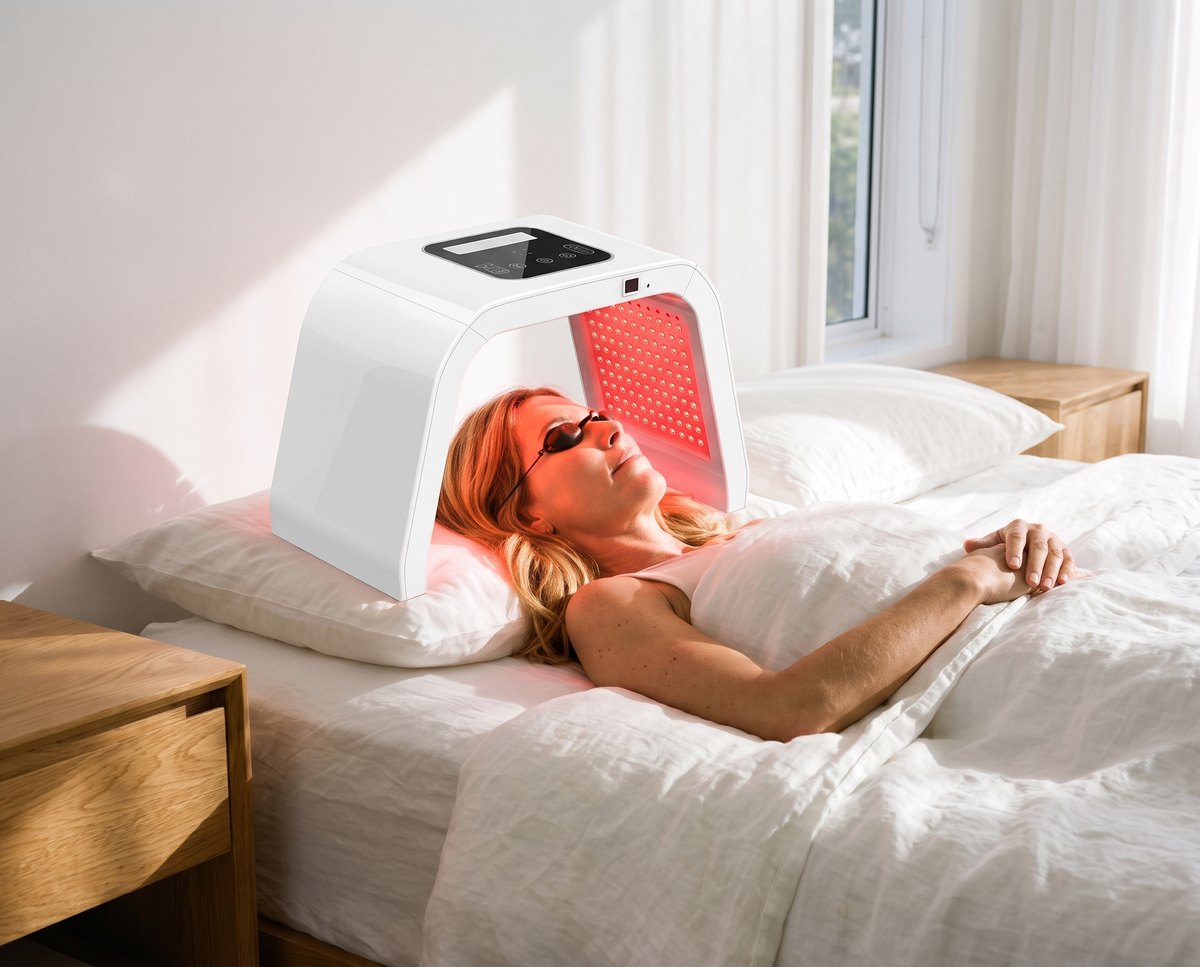
Close your eyes during the session. The panels are bright up close.
Yes. It stands on its own, so you can sit back in a chair or lie in bed with it arched over your face.
Red LEDs, the color used in most of the skin studies.
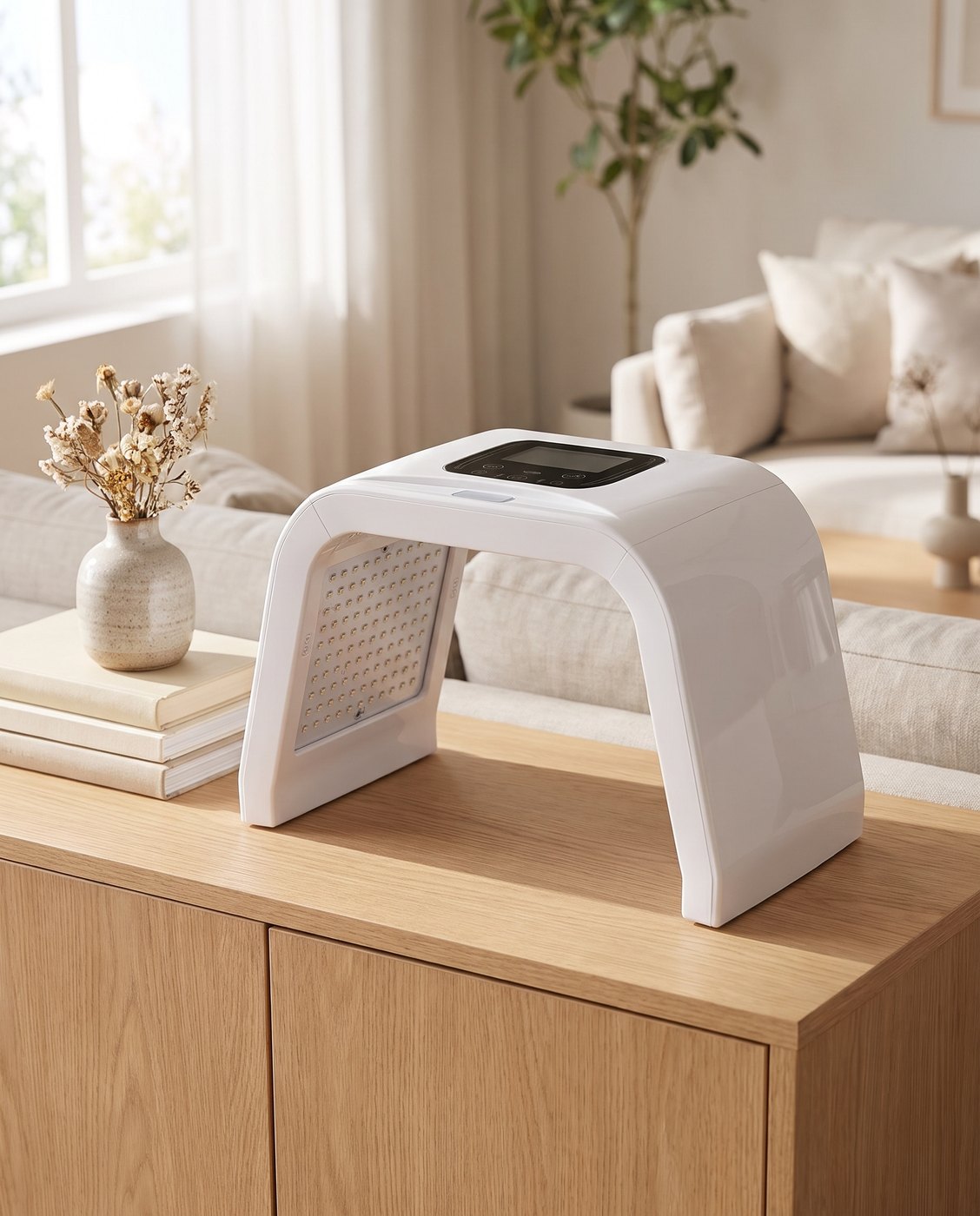
It doesn’t fold: it’s one rigid arch, so it stands on a shelf, dresser or bedside table between sessions.
Yes. Request a return within 30 days of receiving it by emailing info@tharsyn.com. It needs to be unused and in its original packaging; the refund policy has the details.